Baddeley's Working Memory Model Explained Simply
 Michelle Liu
The Most Influential Model of How Your Brain Thinks
In 1974, British psychologists Alan Baddeley and Graham Hitch proposed a model of working memory that fundamentally changed how we understand the human mind. Before their work, the dominant view was that short-term memory was a single, simple storage buffer. Baddeley and Hitch showed it was something far more complex: a multi-component system for actively processing information.
Nearly 50 years later, Baddeley's model remains the most widely cited and empirically supported framework for understanding working memory. This article explains each component in plain language and shows how understanding the model can help you optimize your cognitive performance.
The Four Components of Working Memory
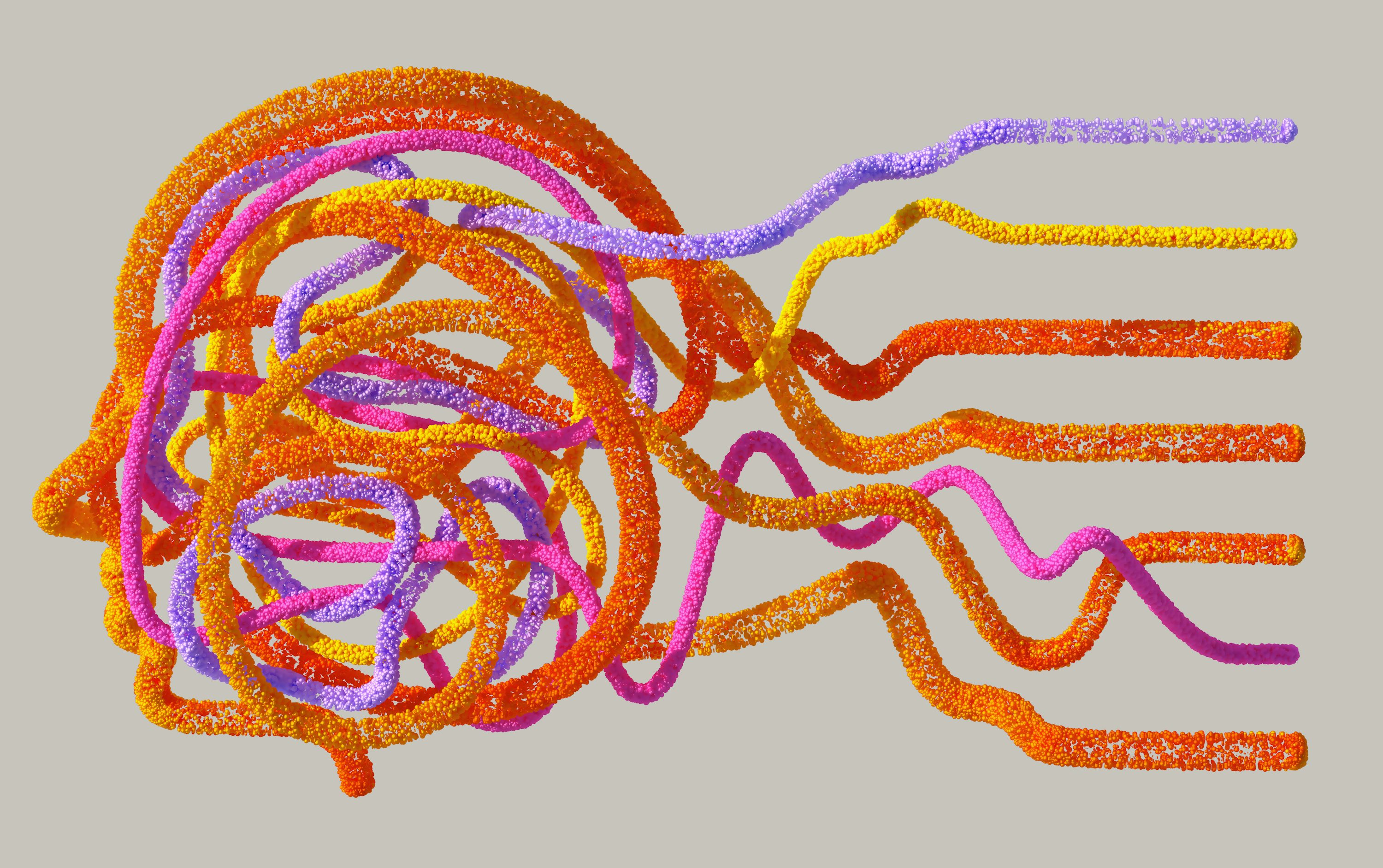
Baddeley's model (updated in 2000) describes working memory as having four interacting components:
Test each component of your working memory
Take the free CortexLab test now
1. The Central Executive: The Boss

The central executive is the attention control system of working memory. It doesn't store information itself. Instead, it directs where attention goes, coordinates the other components, and manages cognitive resources.
What It Does
- Focuses attention: Decides what information to prioritize and what to ignore
- Switches attention: Shifts focus between tasks or streams of information
- Inhibits distractions: Suppresses irrelevant information that competes for attention
- Coordinates subsystems: Manages information flow between the phonological loop, visuospatial sketchpad, and episodic buffer
Why It Matters
The central executive is the bottleneck of working memory. Its capacity is severely limited, which is why multitasking degrades performance: you're asking the central executive to rapidly switch between tasks, and each switch has a cost.
ADHD is thought to involve dysfunction primarily in the central executive. This explains why people with ADHD struggle with sustained attention, impulse control, and task management: all central executive functions.
CortexLab's Task Switching test directly measures central executive function by requiring you to shift between different categorization rules.
2. The Phonological Loop: The Inner Voice
The phonological loop handles verbal and auditory information. When you repeat a phone number in your head, rehearse what you're about to say, or hear a sentence and hold it in mind, you're using the phonological loop.
Two Sub-Components
- Phonological Store: Holds speech-based information for about 2 seconds before it fades. This is why you can remember the last few words someone said even if you weren't paying attention
- Articulatory Rehearsal Process: The "inner voice" that refreshes information by silently repeating it. This is how you keep a phone number alive in memory by "saying" it internally
Key Findings
- Word length effect: You can remember more short words than long words, because longer words take more time to rehearse in the articulatory loop
- Phonological similarity effect: Words that sound alike (cat, mat, hat) are harder to remember than words that sound different (pen, day, cow), because they create confusion in the phonological store
- Articulatory suppression: If you block the rehearsal process (by saying "the the the" repeatedly), verbal working memory drops dramatically
Practical Application
When learning new vocabulary or facts, saying them aloud engages both the phonological store and the articulatory rehearsal process, strengthening encoding. This is why reading aloud helps some people study more effectively.
3. The Visuospatial Sketchpad: The Mind's Eye

The visuospatial sketchpad processes visual and spatial information: mental images, object locations, spatial navigation, and visual patterns.
What It Handles
- Visual imagery: Picturing a friend's face, imagining what a room would look like rearranged
- Spatial navigation: Mentally tracing a route, knowing where you parked your car
- Pattern recognition: Remembering a visual layout, recognizing visual sequences
- Object tracking: Keeping track of where objects are in space
Key Findings
- The visuospatial sketchpad is largely independent from the phonological loop. You can process visual and verbal information simultaneously with minimal interference, but two visual tasks or two verbal tasks will compete
- It has its own capacity limit, separate from verbal working memory
- It's particularly important for mathematics, engineering, architecture, and spatial reasoning
How CortexLab Measures It
CortexLab's Memory Grid test directly targets the visuospatial sketchpad. You observe a pattern on a grid, hold it in your mind's eye after it disappears, and reproduce it. Progressive difficulty levels (3x3 through 5x5) probe the capacity limits of your visuospatial working memory.
4. The Episodic Buffer: The Integration Hub
Added by Baddeley in 2000, the episodic buffer was introduced to solve a problem: how does working memory combine information from different sources into a coherent experience?
What It Does
- Integrates information from the phonological loop, visuospatial sketchpad, AND long-term memory into unified "episodes"
- Binds multimodal information: When you watch a movie, you effortlessly combine visual scenes (sketchpad), dialogue (phonological loop), and your knowledge of the plot (long-term memory). The episodic buffer makes this possible
- Provides a workspace for conscious awareness: It's where the "stream of consciousness" happens
Why It Was Added
The original 1974 model couldn't explain how people could remember prose passages that exceeded the capacity of either the phonological loop or visuospatial sketchpad alone. The episodic buffer explains this: it draws on long-term memory (knowledge of language, grammar, semantics) to compress and structure information, effectively expanding apparent working memory capacity.
How the Components Work Together: An Example

Imagine you're following a recipe while cooking:
- Phonological loop: Holds the verbal instructions ("add 200ml of milk")
- Visuospatial sketchpad: Tracks where ingredients are on the counter, visualizes what the dish should look like
- Episodic buffer: Integrates the verbal instructions with your visual memory of the recipe page and your long-term knowledge of cooking techniques
- Central executive: Coordinates everything, decides what to do next, and redirects attention when the timer goes off
If any component is overloaded (too many steps to remember, too many things on the stove, an interruption from your phone), the whole system degrades. Understanding which component is the bottleneck helps you find the right strategy: write down the steps (offload the phonological loop), organize your workspace (reduce visuospatial load), or eliminate distractions (free the central executive).
What the Model Means for You

Understanding Baddeley's model isn't just academic. It has practical implications for how you learn, work, and optimize your brain:
Study Smarter
Use both verbal AND visual encoding for maximum retention. Don't just read (phonological loop) - draw diagrams (visuospatial sketchpad) and create stories (episodic buffer). Multi-channel encoding creates redundant memory traces.
Work More Effectively
Recognize that different tasks load different components. A verbal task (writing an email) and a spatial task (arranging a layout) can be interleaved more easily than two verbal tasks, because they use different subsystems.
Measure and Improve
CortexLab's test battery maps onto the components of Baddeley's model:
- Memory Grid: Visuospatial sketchpad capacity
- Task Switching: Central executive function
- PVT (Reaction Time): Alertness and sustained attention (central executive)
- DSST (Processing Speed): Information encoding speed across subsystems
- Pattern Recognition: Integration of visual patterns with logical rules (episodic buffer + visuospatial sketchpad)
Baddeley's working memory model is more than a theory. It's a practical framework for understanding why your brain performs the way it does and what you can do about it. By knowing which component is your strength and which is your bottleneck, you can choose targeted strategies for improvement. Start by measuring each component with CortexLab's free cognitive test battery.
Share this article

Michelle Liu
Developer & Cognitive Performance Researcher at CortexLab
Software engineer bridging cognitive science and technology. Focused on building scientifically-grounded brain performance measurement tools.